Journey to the End of the Earth: Part 3 – Colonia, El Calafate & the Cherry on Top
After Antarctica, most people would call it a trip. We called it halftime.
Here's the thing about coming back from Antarctica.
You're changed. Something shifted down there on that ice and you can feel it. But life doesn't pause for your existential moment — the boat docks, the bags come off, and suddenly you're back in Buenos Aires with warm air and city noise and a whole second act waiting.
We weren't done. Not even close.
Buenos Aires: Back to the Land of the Living — And a Hard Lesson in Hotel Research
Landing back in Buenos Aires after the ice felt like stepping through a portal. Heat. Traffic. Smell of food. People everywhere moving fast with places to be.
We dropped our bags at HTL Urbano.
Now. I'm going to be real with you.
There are moments in travel — and in life — where you look around a room and think: I am too old for this. Not in a snobby way. Just in a very honest, very clear this is not it kind of way.
HTL Urbano was that moment. 😂
Look — it's cheap. It does what it says. No complaints about the price. But standing there after two weeks of Antarctica, the Drake Passage, and the end of the earth — something in me just said no.
I pulled out my phone right there and cancelled the return reservation I had booked for when we came back from El Calafate. On the spot. Zero hesitation.
Upgraded to the Park Tower Marriott. Luxury Collection. Done.
Some decisions in life are easy. That was one of them. 🏨
Colonia del Sacramento: The Day Trip That Became the Highlight
We took the ferry across to Colonia del Sacramento, Uruguay — and I'll be honest, I wasn't expecting much. A day trip. A quick hop across the river. Something to tick off the list.
I was completely wrong.
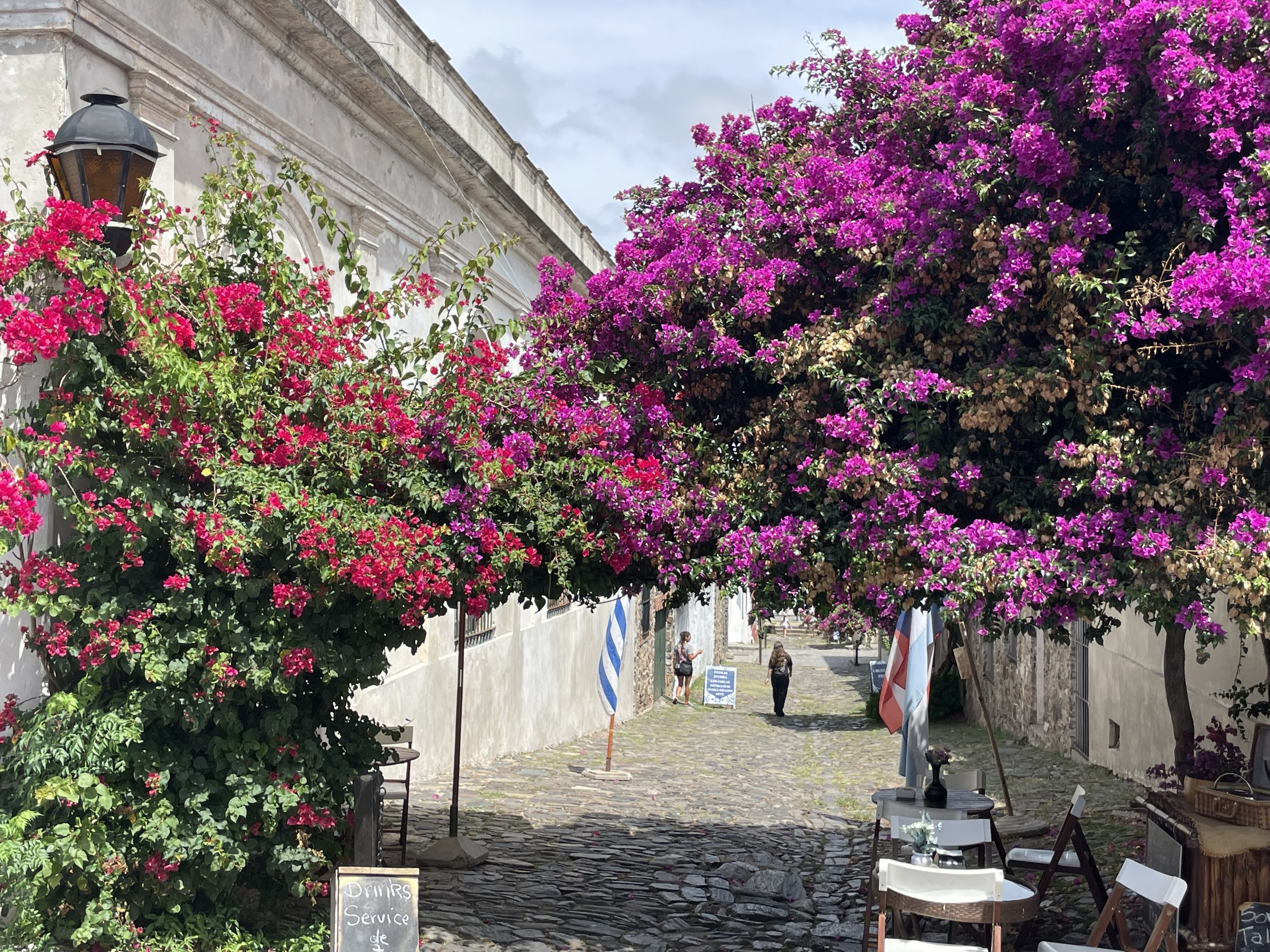
Colonia hit differently. Cobblestones, colonial walls, colours everywhere, and a pace of life so unhurried it felt almost rebellious. I'd been to Uruguay before — Montevideo back in 2009 — but this was a different beast entirely.
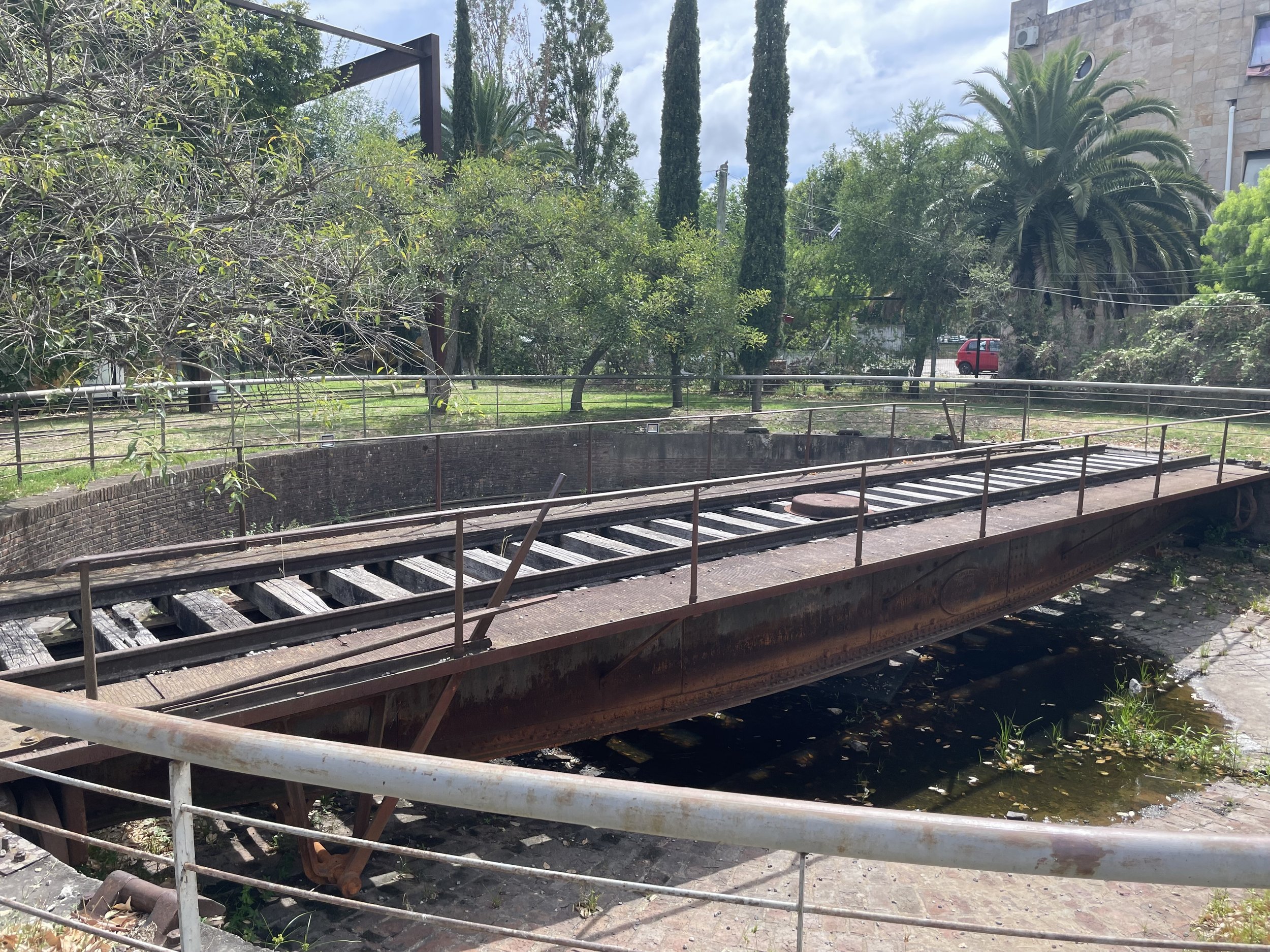
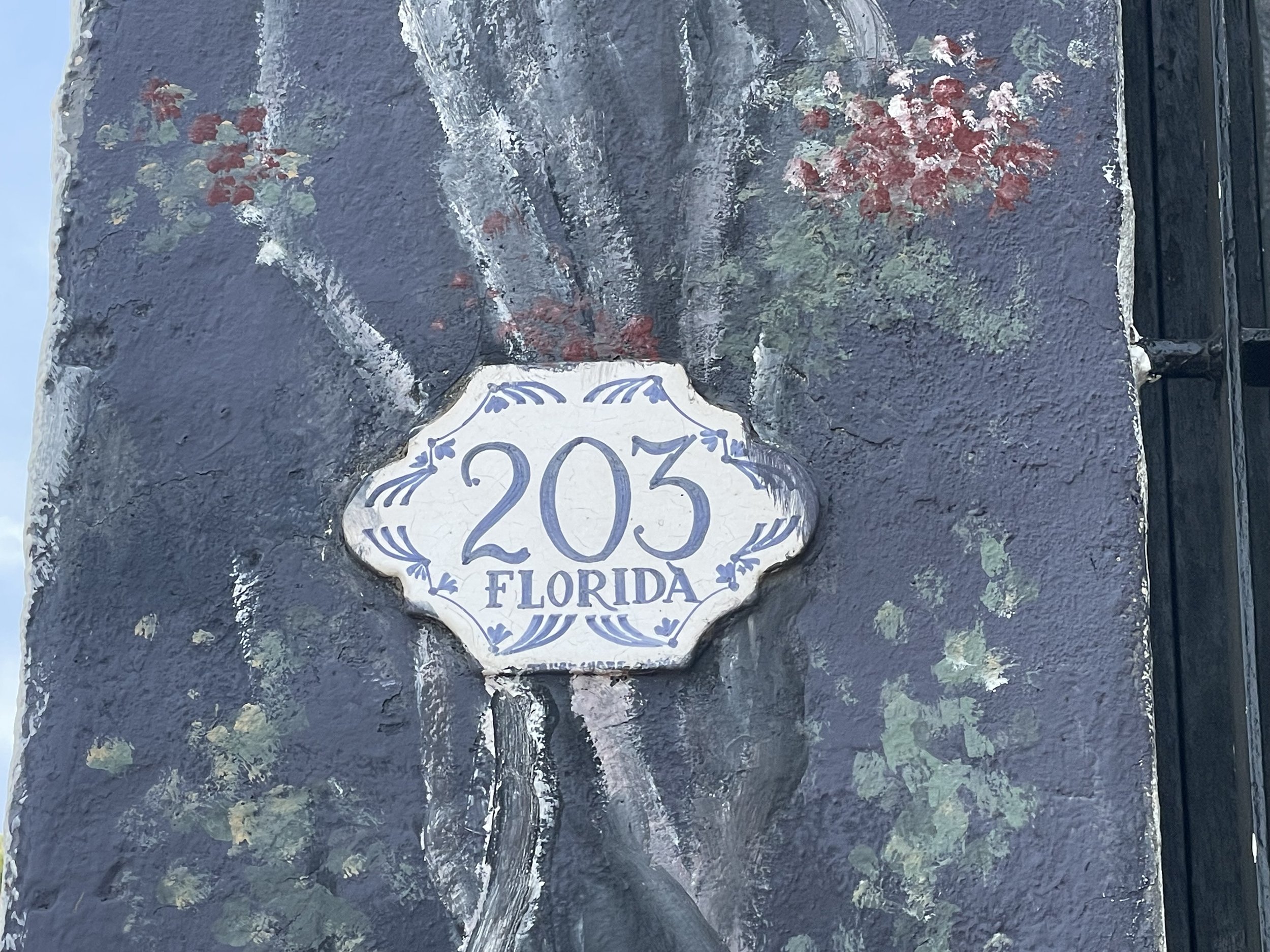
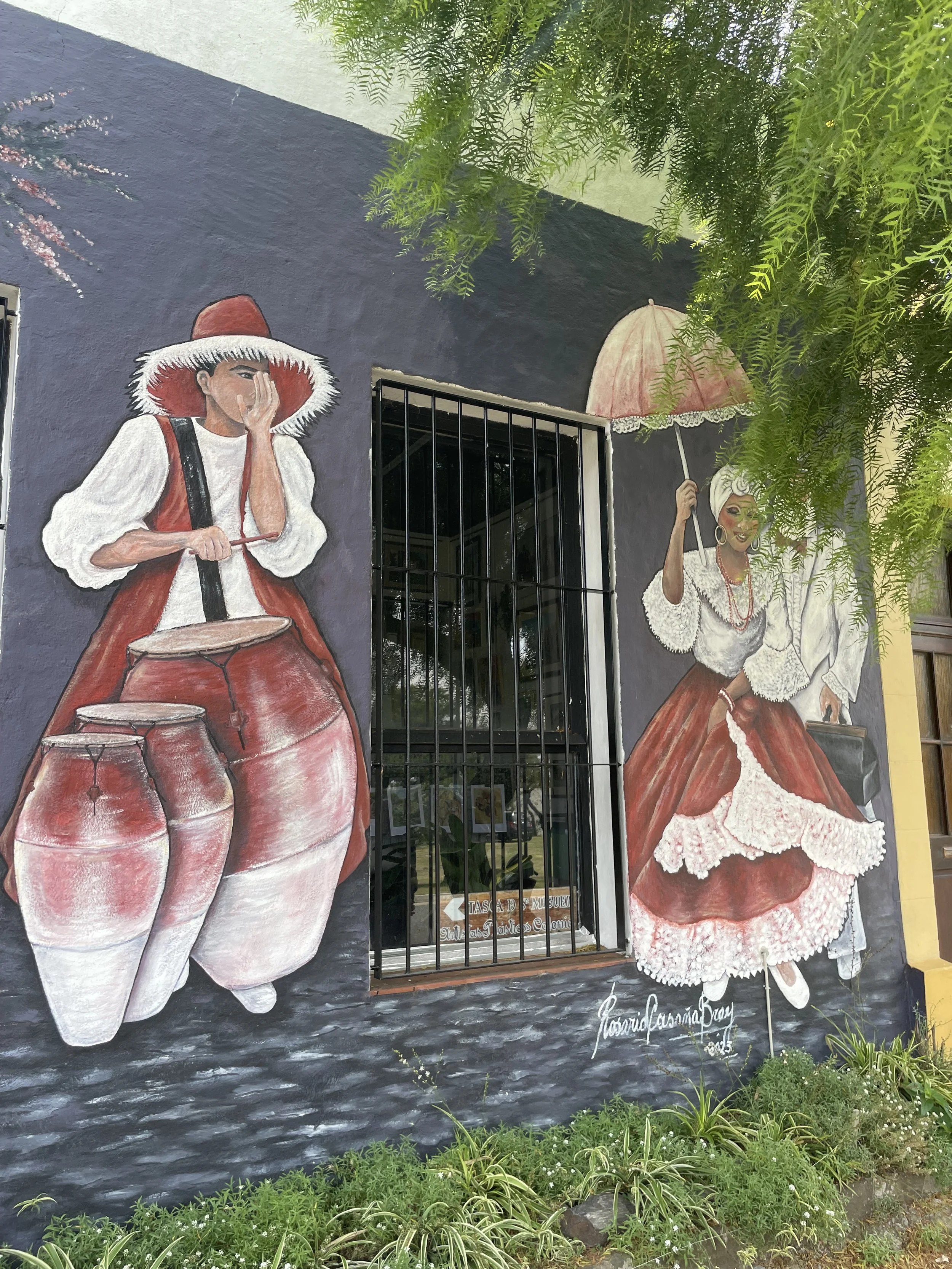
We kicked things off with a walking tour — yes I booked a guide, proud of it — starting at the old train station district. Passed Florida 203 which obviously caught my eye immediately being from Florida. But what really stopped me were the murals. Full Havana, Cuba energy. Vivid, loud, alive.
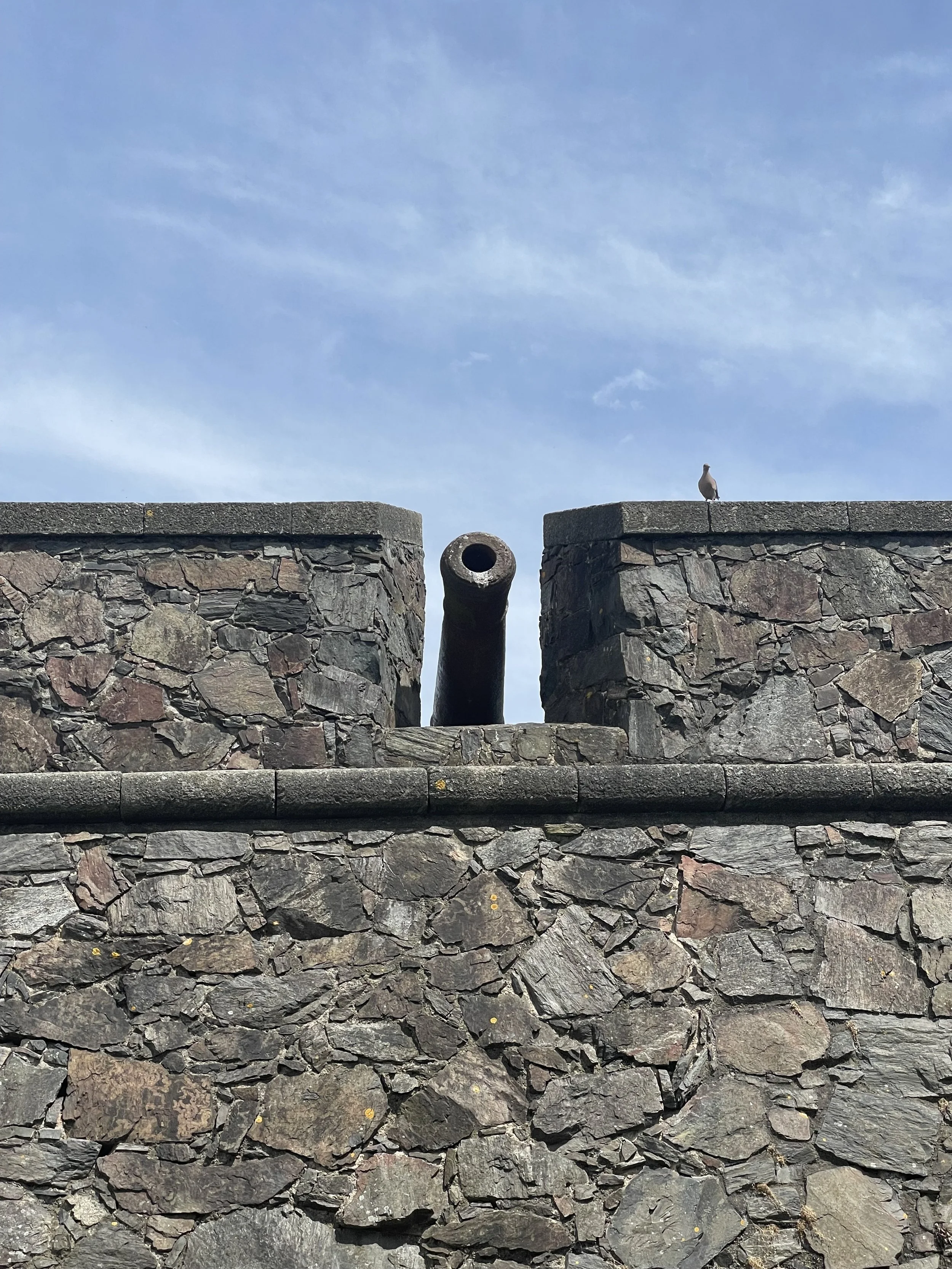
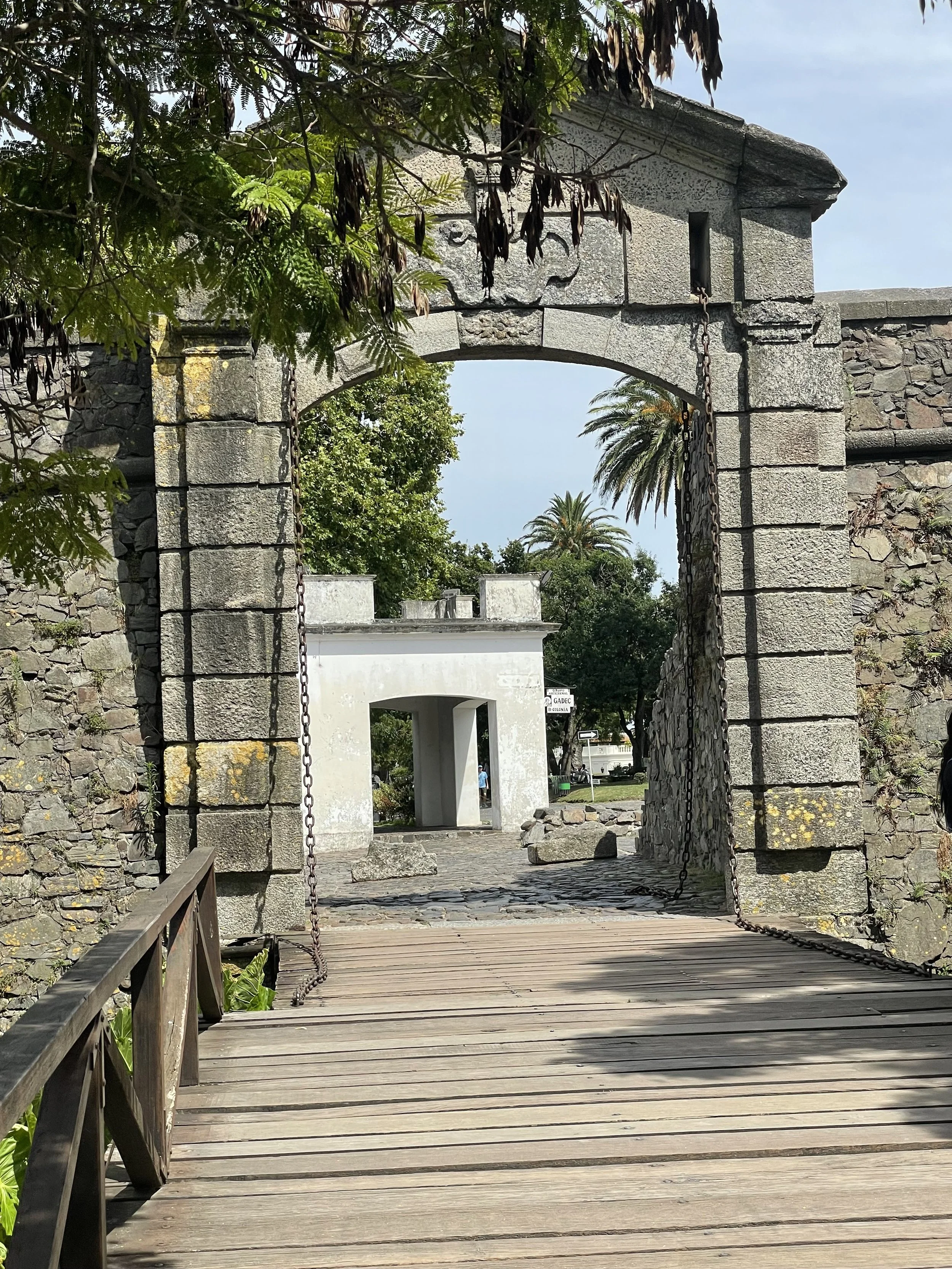
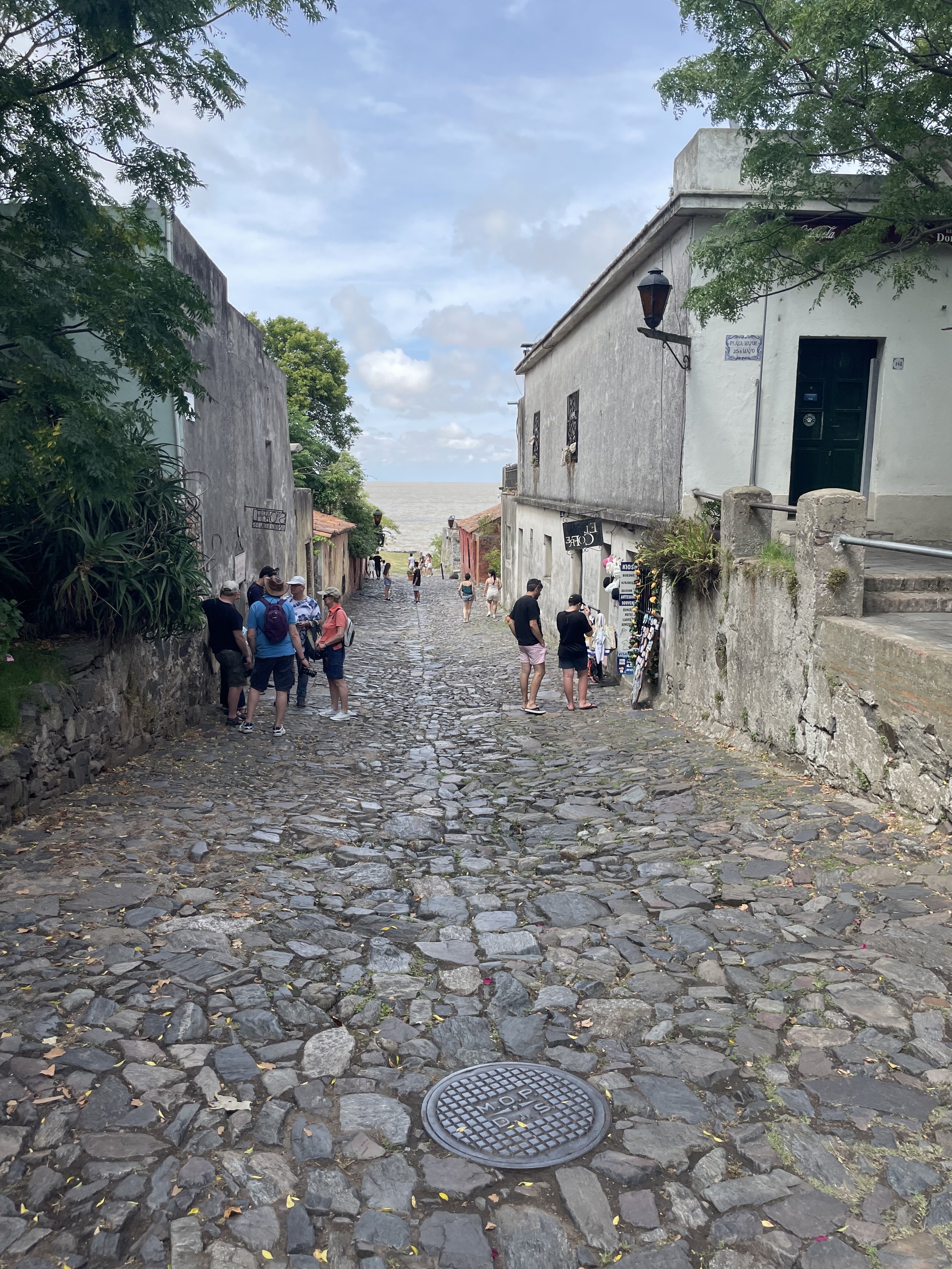
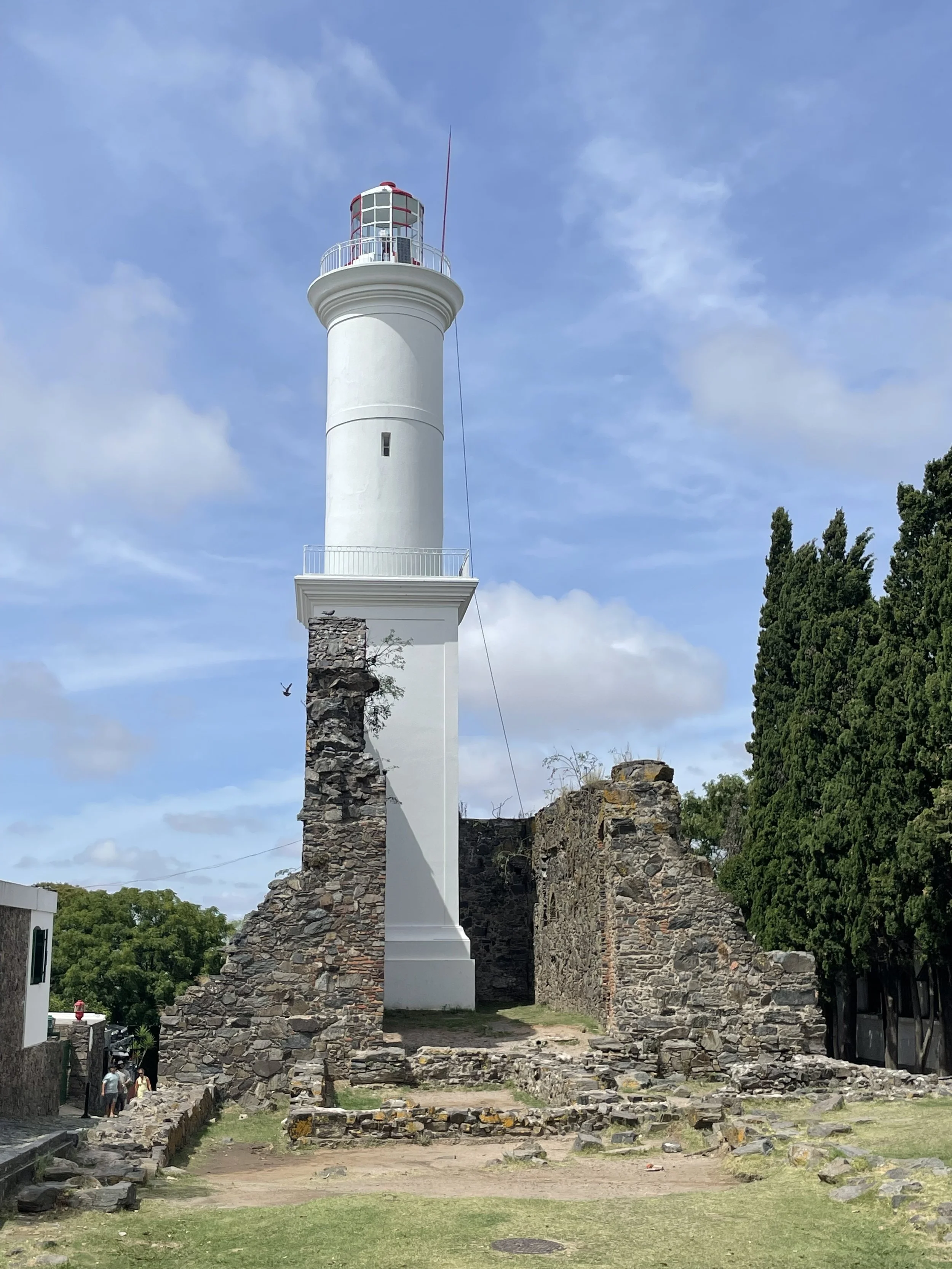
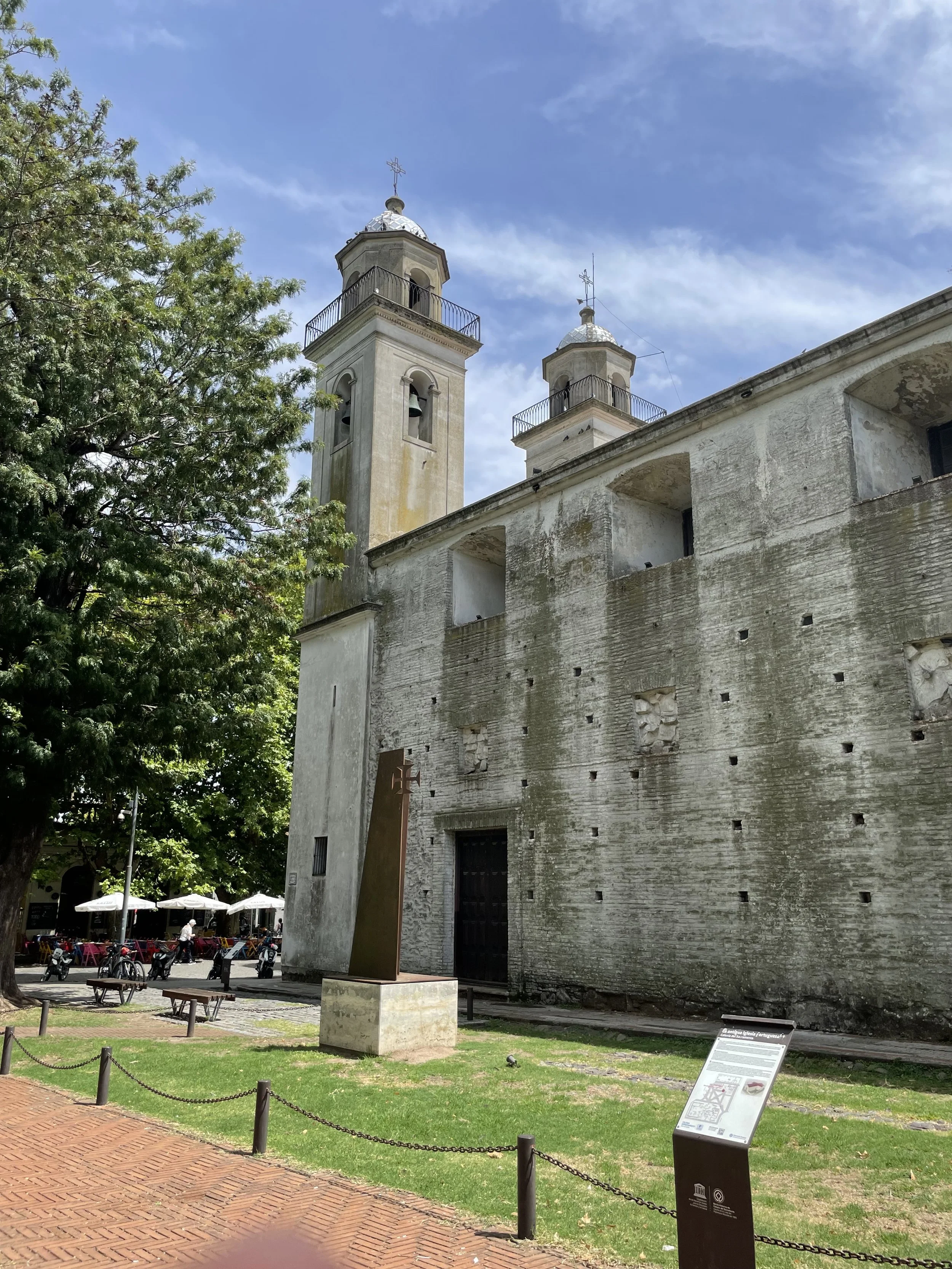
Then through the historic city gate, flanked by cannons that looked straight out of a pirate movie. Which makes sense — Colonia was founded by the Portuguese in 1680, then fought over repeatedly between Portugal and Spain, changing hands more than seven times over the centuries. The whole city is basically a beautiful scar from that colonial tug of war. UNESCO agreed — it's a World Heritage Site today.
Plaza Mayor 25 de Mayo was the heart of it. I could have stood there all afternoon. Actually — I kind of did.
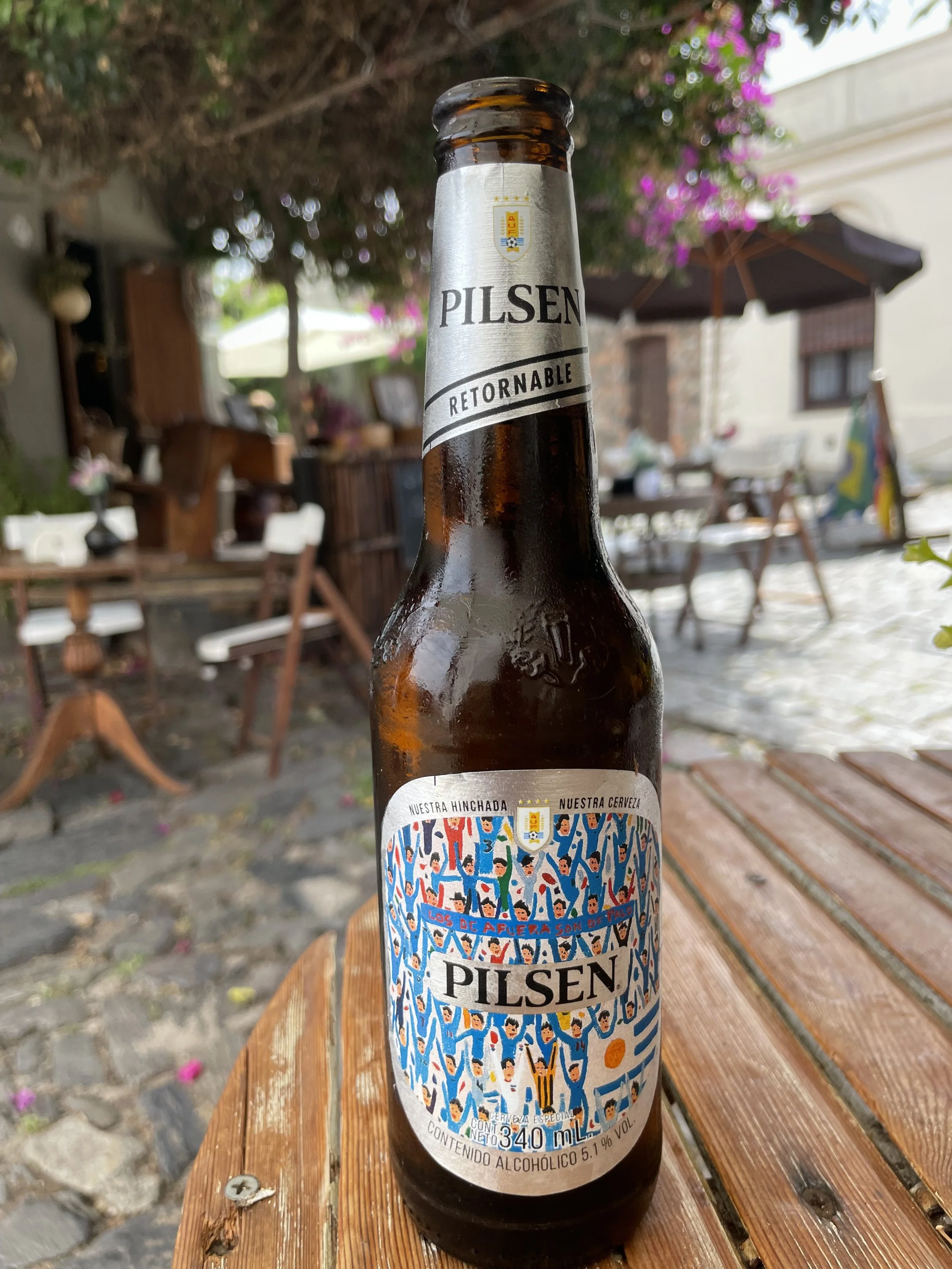
And obviously — local beer. Pilsen, Uruguayan flag on the label, ice cold on a hot day. Hydration with a flag on it. 🍺
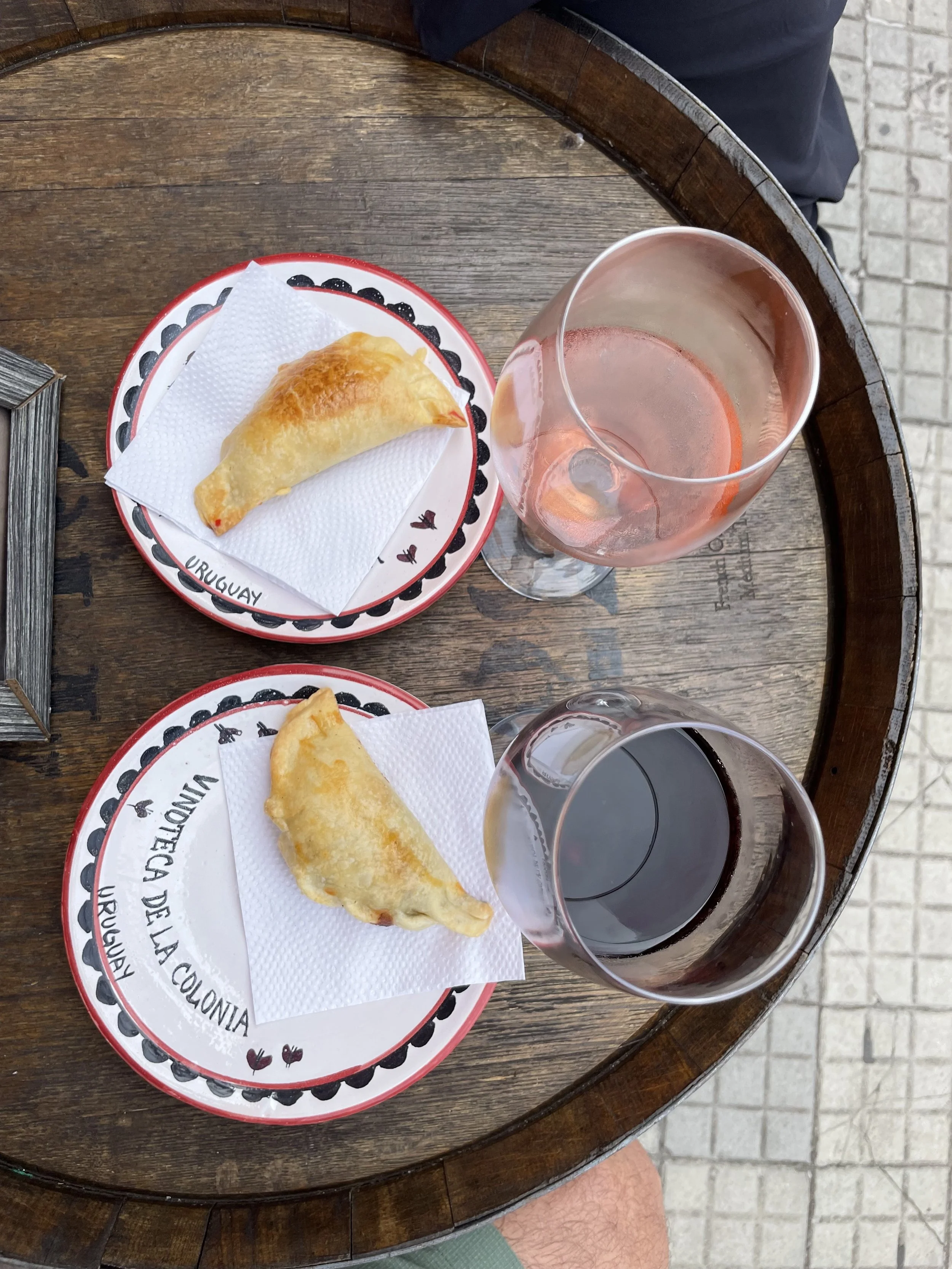
We ended the evening at Vinoteca de La Colonia — a tiny wine spot on the corner serving local wines and empanadas with serious flavour. Then a cozy restaurant, more wine, a cheese and charcuterie board that appeared like it was summoned by magic.
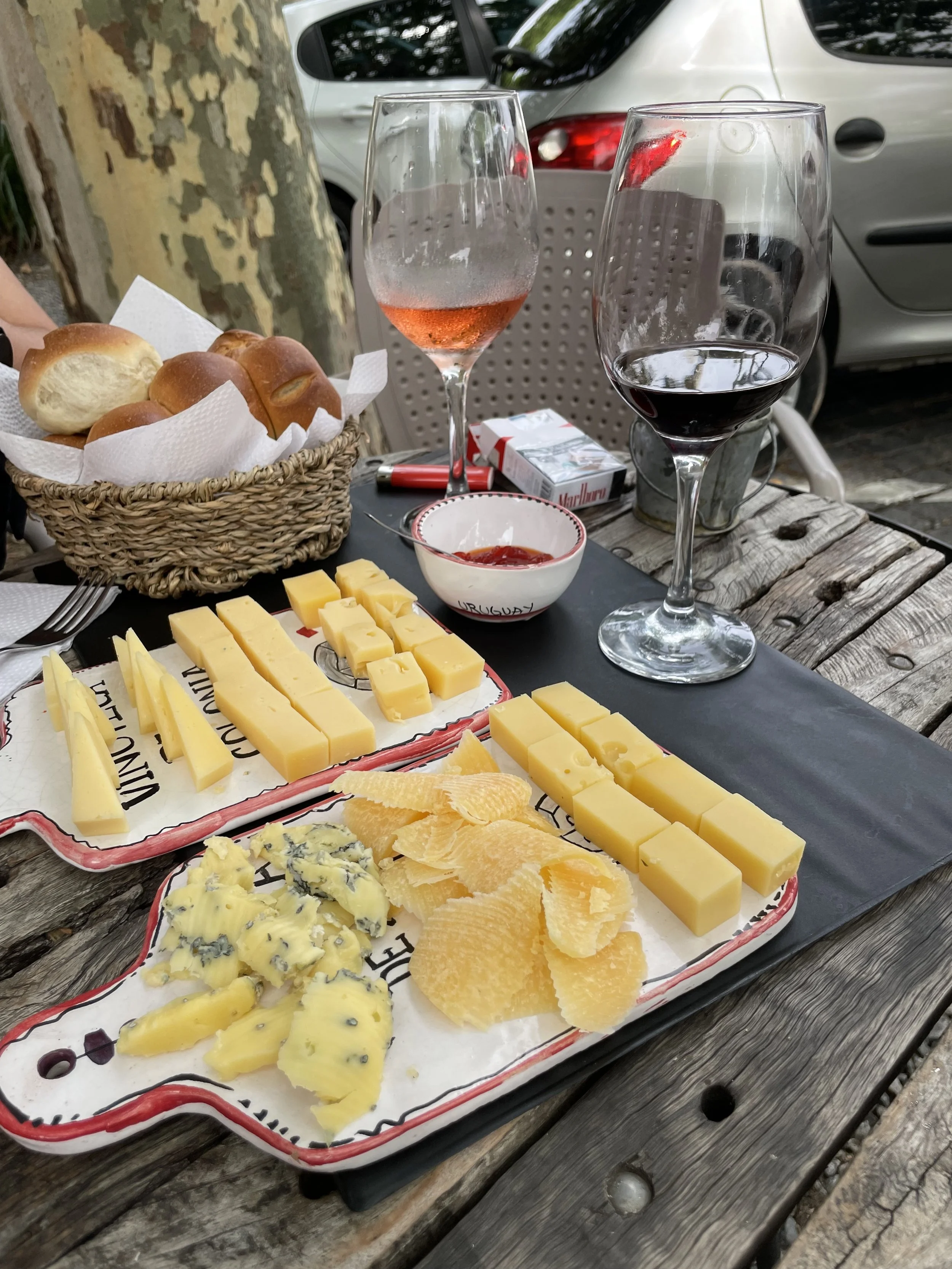
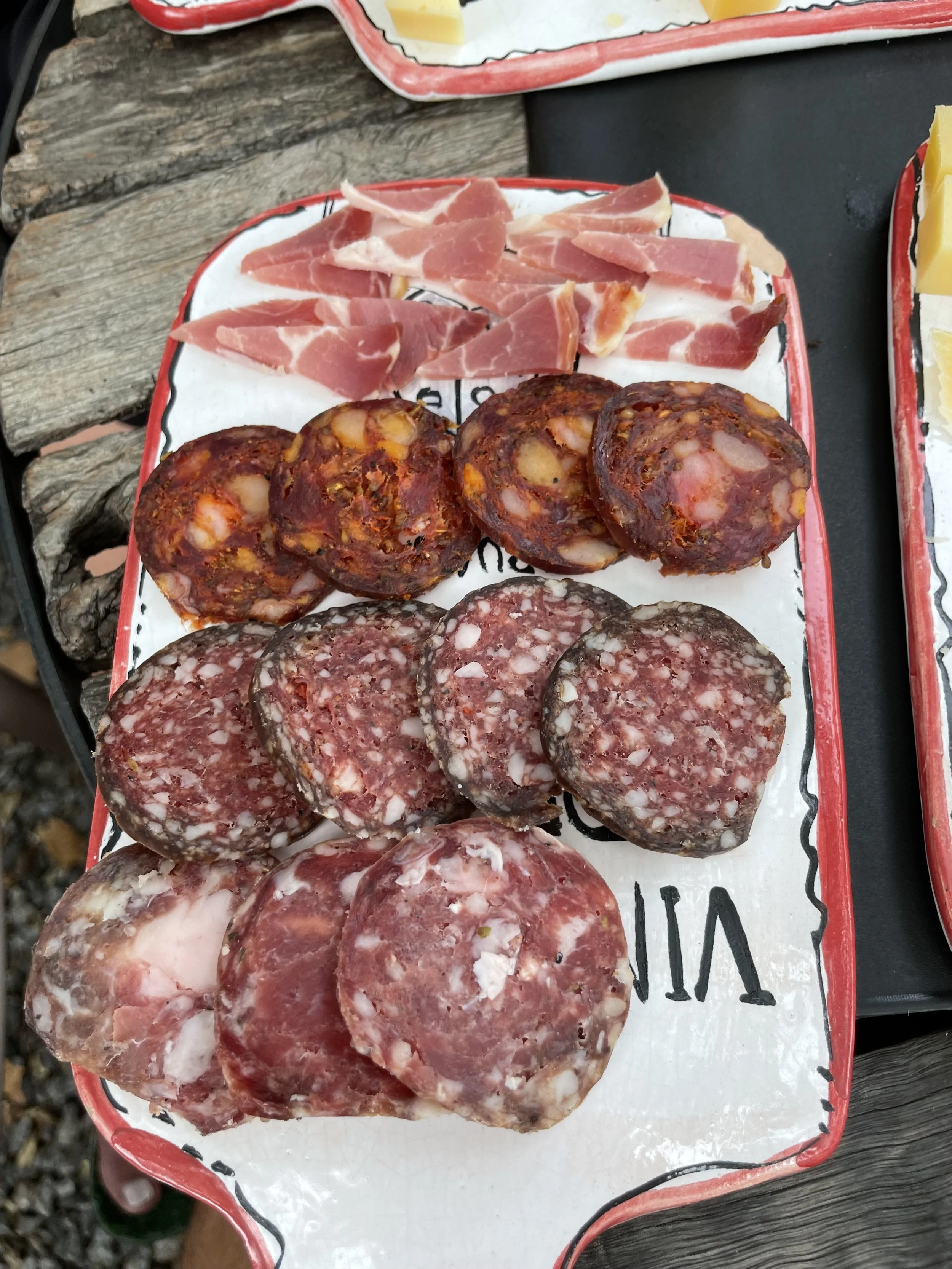
We didn't want to leave. One day in Colonia wasn't enough. It never is.
El Calafate: Patagonia's Big Encore
We flew south to El Calafate — deep in Patagonia, surrounded by that particular kind of stunning nothingness that only this part of the world does. Think of it as Antarctica's cousin. Same drama, slightly warmer toes.
First stop — and nothing could have fully prepared me for it after everything we'd already seen — Perito Moreno Glacier.
I thought I was done being amazed by glaciers. I was not.
Perito Moreno is different. It's not just something you look at — it's something you feel. Massive, brilliant, almost electric. We spent a full day on the catwalks watching ice calve off the face and crash into the water below. Every crack echoed like a stadium. Every collapse landed like an exclamation point.
After all we'd seen — this thing still left us speechless.
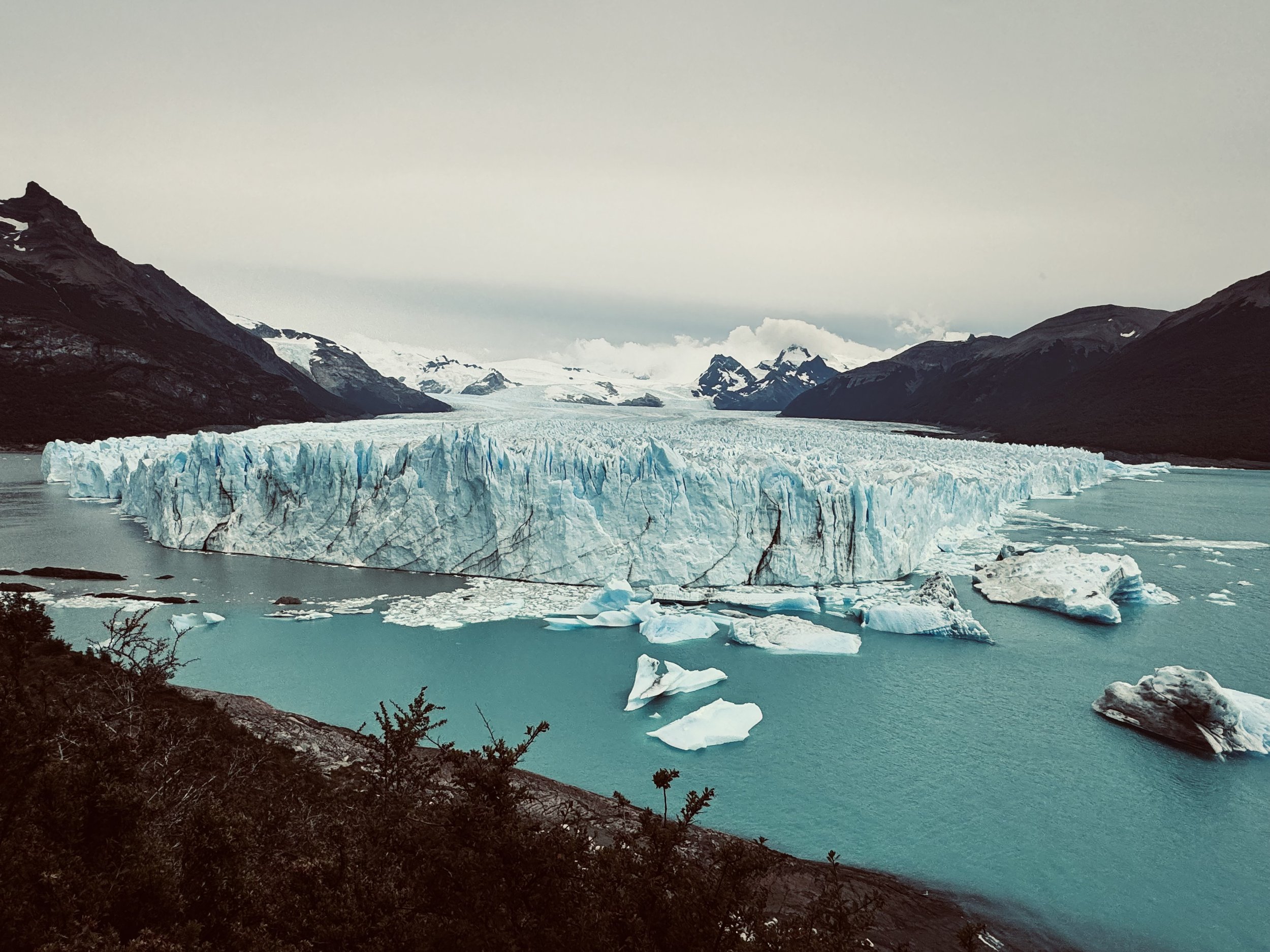
We spent a full day walking along the catwalks, watching the ice calve off into the water below. Every crack and splash felt like a stadium moment.
El Chaltén & Fitz Roy: The Sky Was Showing Off
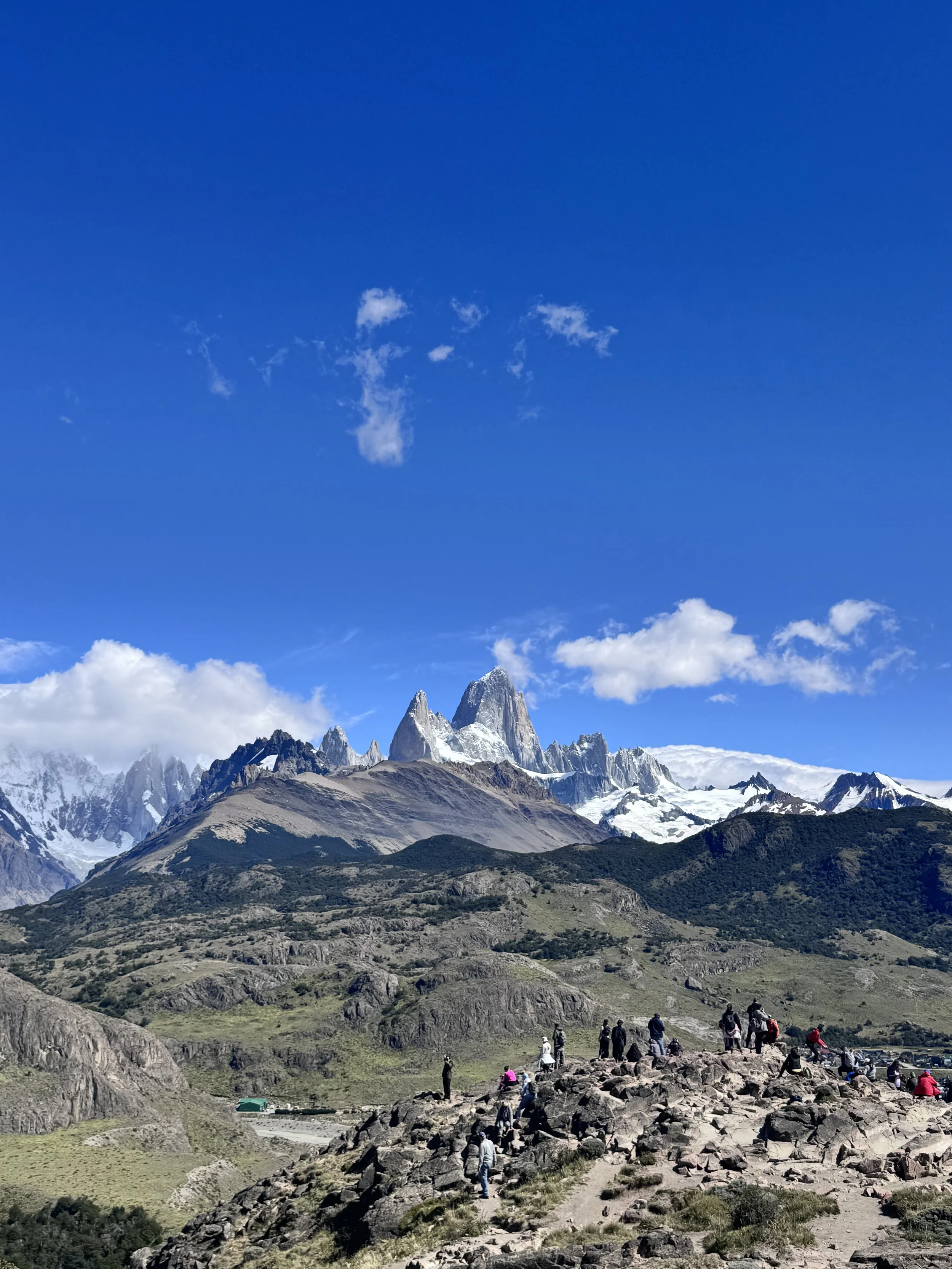
The next day we headed out toward El Chaltén and Mount Fitz Roy.
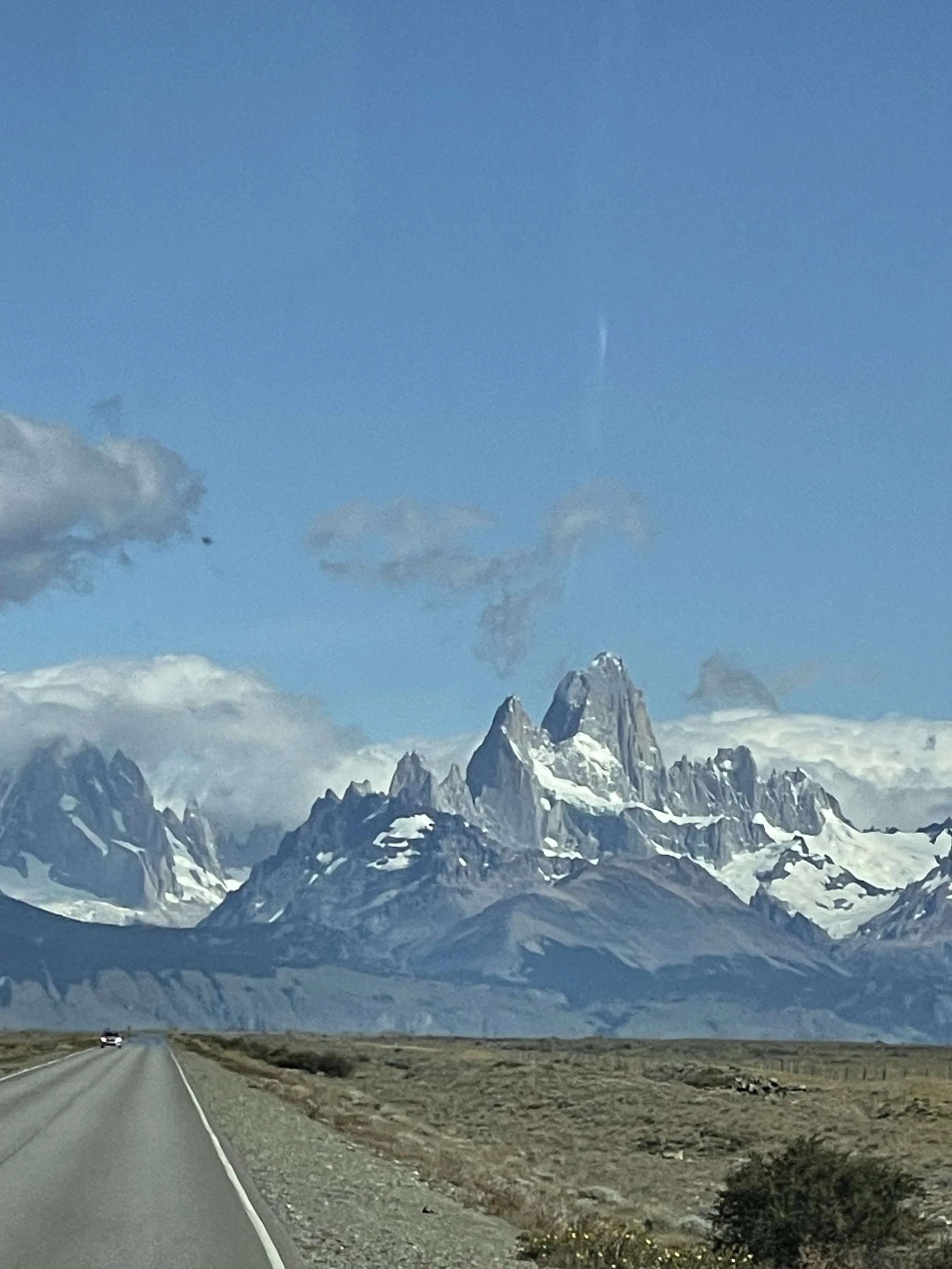
The sky that day was the kind of blue that makes your photos look fake. Fitz Roy rising through it, sharp and impossibly dramatic, framed perfectly against nothing but space. I stood there trying to take a photo that did it justice.
Didn't manage it. Some things just refuse to be captured.
Along the road we spotted guanacos — llama cousins, wandering the landscape. Beautiful animals. Though it was hard to ignore how many were penned behind fences on private land, restricted from moving freely through terrain that should be theirs. A small sobering note in the middle of all that beauty.
We passed Lago Argentino — the largest freshwater lake in Argentina, that milky turquoise colour coming from glacial sediment — stretching out like a mirror for the sky.
The lake feeds off glaciers from the Southern Patagonian Ice Field, including Perito Moreno, and was first officially named in 1877 during one of the early explorations of the area. It's basically the liquid signature of Patagonia.
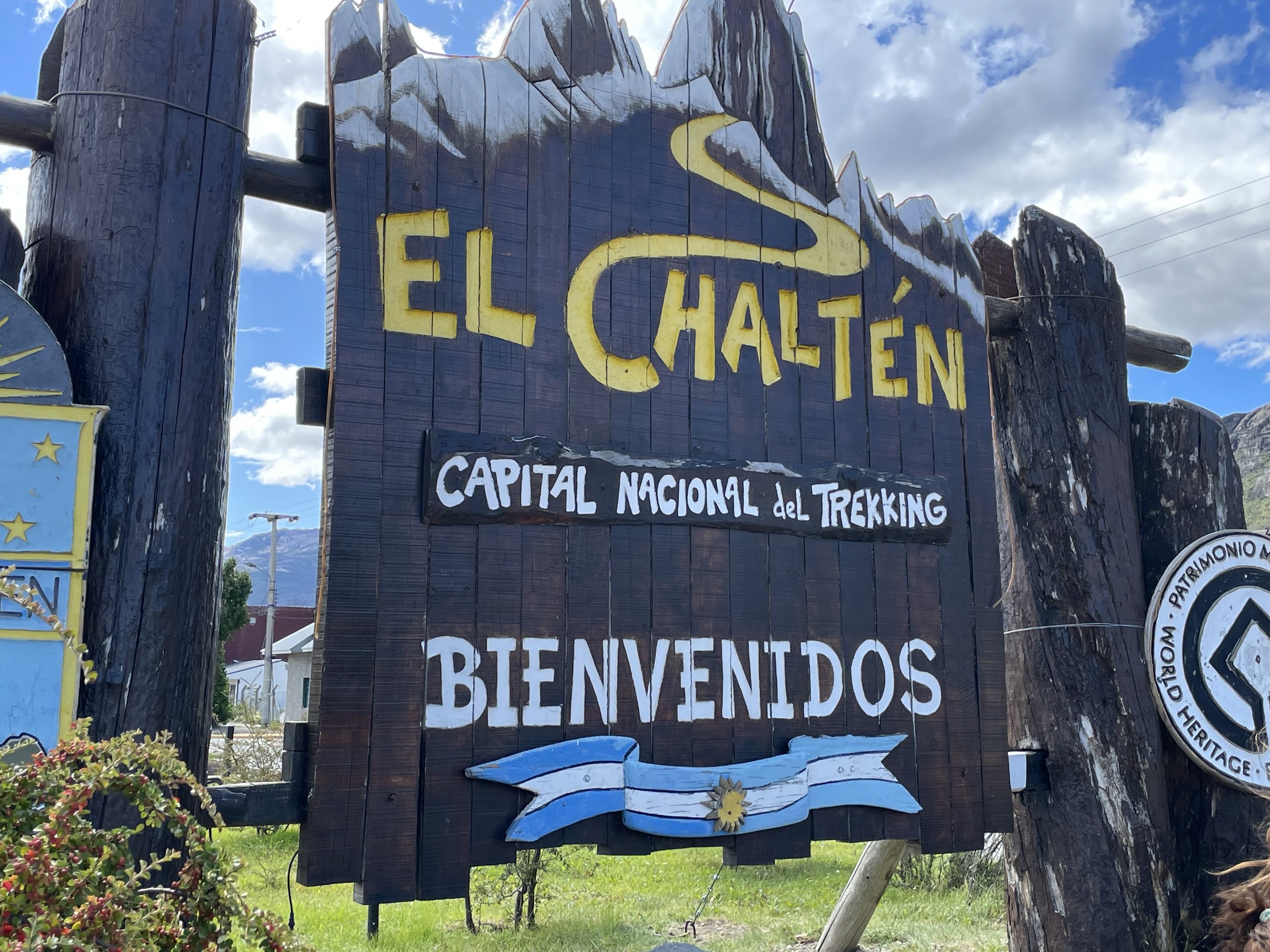
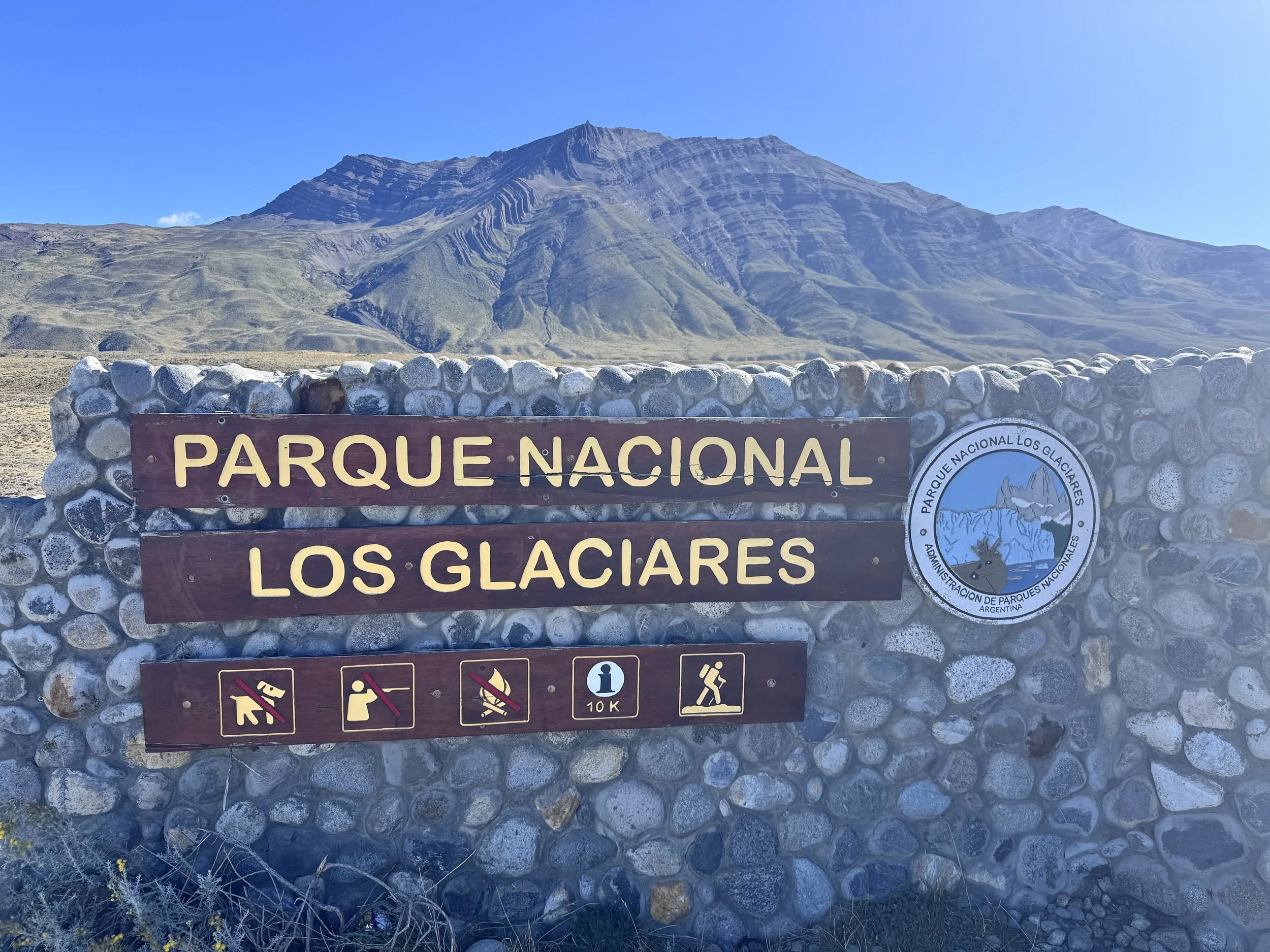
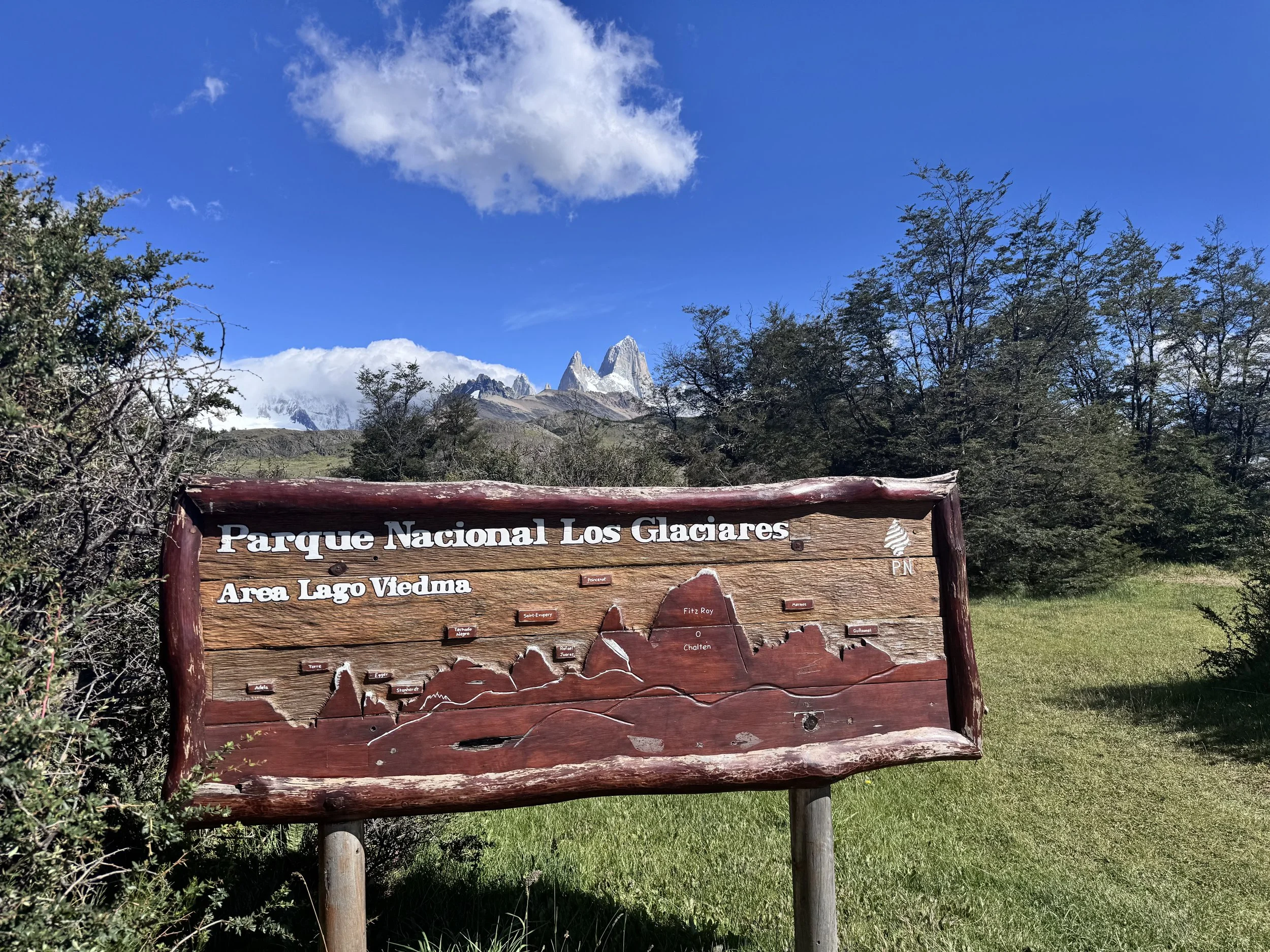
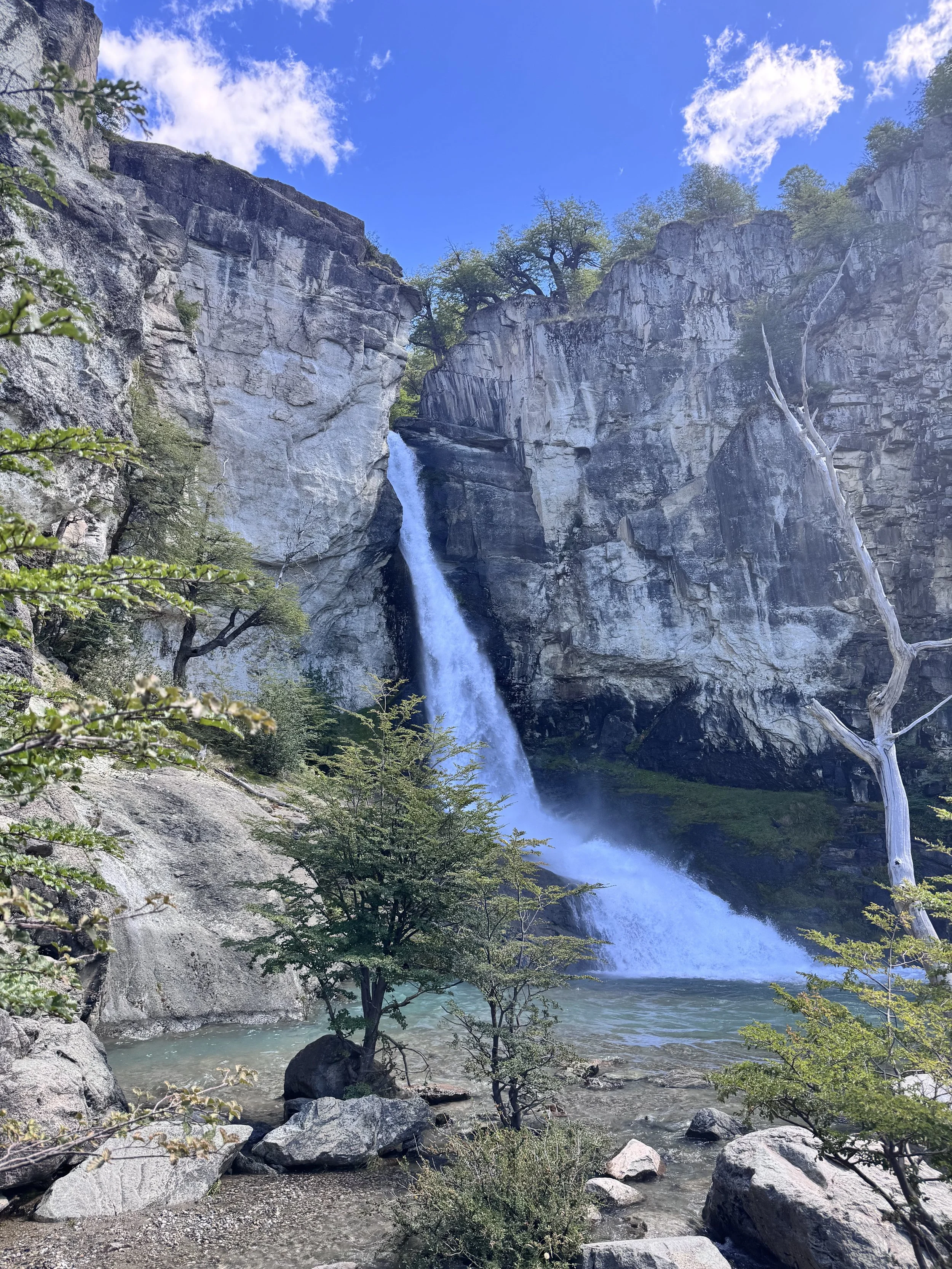
A short hike through Parque Nacional Los Glaciares brought us to an overlook that made every step worth it. Then into El Chaltén itself — a tiny hiker's town full of gear shops, great restaurants, cold beers, and people with that unmistakable three-day trail look. Loved every second of it.
Buenos Aires: The Perfect Final Chapter
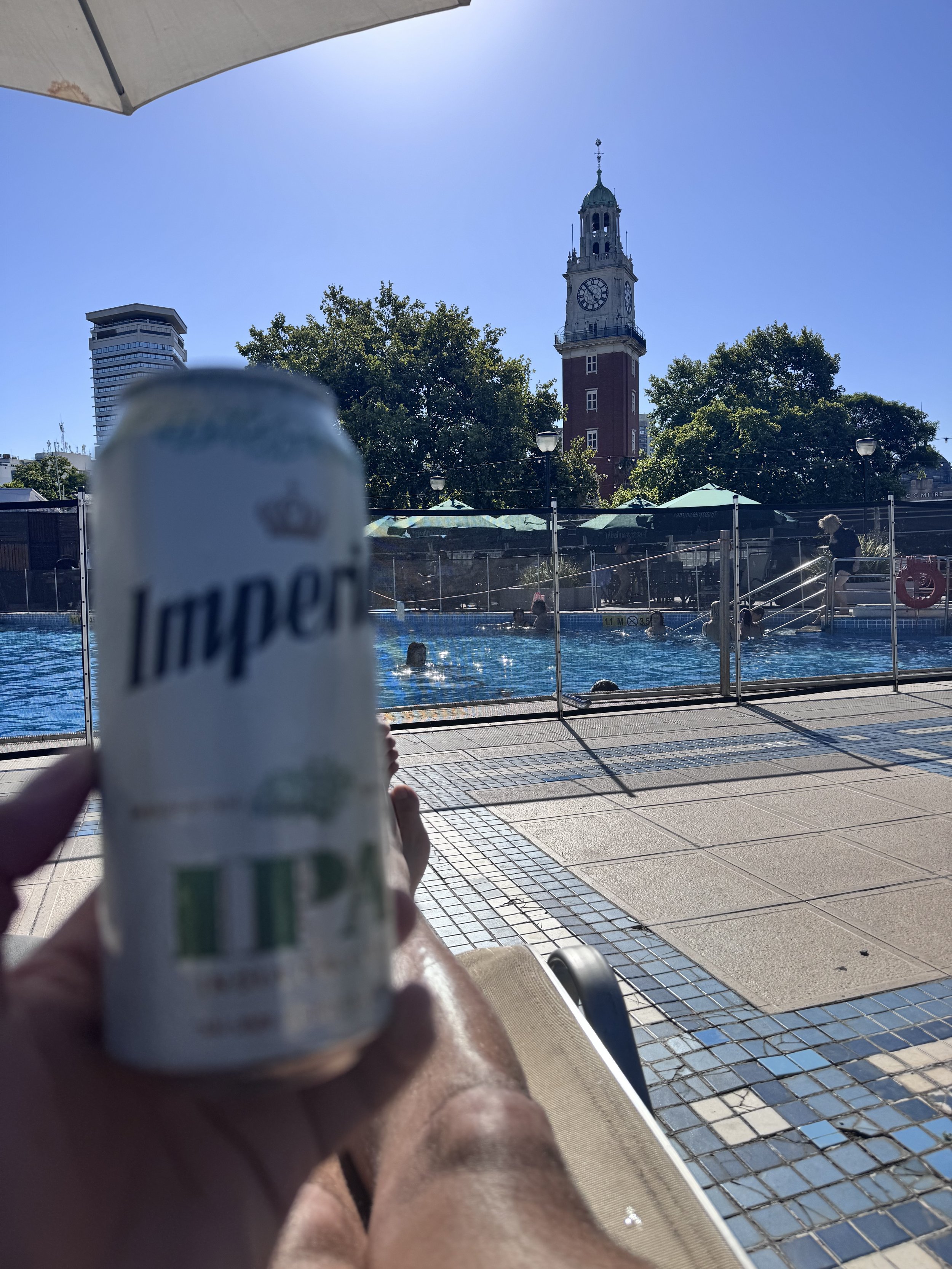
With Patagonia complete, we flew back to Buenos Aires and ended our epic journey in style. Thanks to some Bonvoy points, we checked into a Park Tower, a luxury Collection hotel, dropped our bags, and immediately headed to the pool.
After Antarctica, the Drake, Colonia, Perito Moreno and Fitz Roy — sitting poolside in Buenos Aires with a cold IPA felt like the universe giving us a slow clap. Well done. You made it. Here's a beer and some sunshine.
We raised our glasses. 🍺
Antarctica. Patagonia. Uruguay. Buenos Aires.
Ice and heat. Silence and laughter. Penguins and poolside IPAs.
This trip didn't just take us somewhere. It took us somewhere inside ourselves too — and that's the kind of journey that stays with you long after the tan fades and the bags are unpacked.
First hop to the end of the earth? Do it.
Just pack your seasickness tablets. Trust me on that one. 😂🌎